
The Search for a Medical Motive
The Good Nurse: A True Story of Medicine, Madness, and MurderThis thread tracks the unresolved question of why Cullen harmed patients, from his private explanations to investigators’ competing theories.
increasing Bearing strength in each event
 decreasing
Bearing strength in each eventdecreasingA Caregiver’s Language

A Caregiver’s Language
Intervention Instead of Murder
Cullen described his actions using words such as intervention, passing, and expiration. The vocabulary allowed him to discuss patient deaths while avoiding direct ownership of killing.
A Moral Reframing
He sometimes portrayed patients as suffering or unlikely to recover, though many were not at the point of death when he acted. His language made clinical judgment seem like a justification for choices he had no right to make.
The conflict between his words and the evidence remained unresolved. His account could reveal his thinking, but it could also protect the self-image that made his actions easier to narrate.
A Need for Control

A Need for Control
Power in the Unit
Cullen described feeling bullied, dismissed, and powerless in his personal life and at work. In the hospital, he could alter a patient’s condition through drugs and then observe the consequences.
Relief After Action
The act of intervening gave him a temporary sense of control and relief. The patients themselves often mattered less to him than the effect his actions produced and the response of the unit.
The pattern suggests a motive rooted partly in control, but the book does not claim that this fully explains his crimes. It presents the relief as one strand in a more complicated and morally indefensible behavior.
The Code as Performance
The Code as Performance
The First Responder
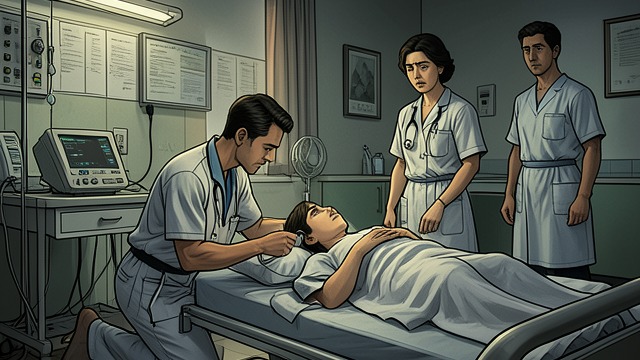
Cullen often arrived quickly when patients coded and could appear unusually knowledgeable about the drugs needed during a crisis. Colleagues sometimes saw him as an exceptional code nurse.
Creating and Managing the Emergency
The possibility that he helped cause some crises made the performance profoundly deceptive. He could participate in the response to an outcome he had secretly set in motion, receiving attention for apparent competence.
The code became both an emergency and a stage on which Cullen could occupy the role of rescuer. That role sharpened the betrayal of colleagues who trusted his apparent expertise.
The Detectives’ Theories
The Detectives’ Theories
Competing Explanations
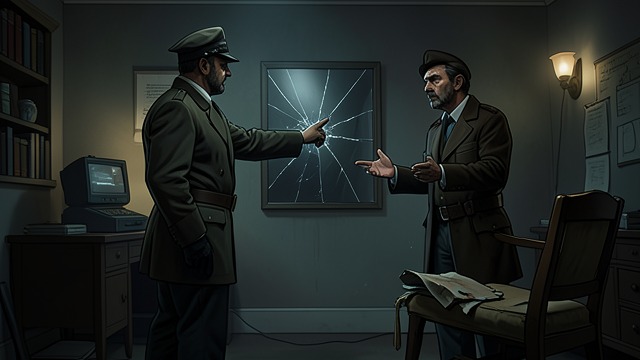
During questioning, detectives suggested sexual gratification or mercy killing as ways Cullen might explain his actions. They hoped that a clear motive would help him speak or make the crimes intelligible.
No Simple Category
FBI profilers found that Cullen did not fit familiar patterns neatly. His actions did not appear to match straightforward heroic or mercy-killing narratives, and his motivations remained difficult to categorize.
The investigators’ theories were tactics, not established truths. The case could prove conduct more readily than it could resolve the inner logic of the person who committed it.
An Unanswered Why

An Unanswered Why
Confession Without Full Explanation
Cullen acknowledged many killings but did not provide a complete motive or a reliable accounting of every victim. He described compulsion and personal distress without offering a coherent explanation that could reconcile those actions with his professed care for people.
Complexity Is Not Absolution
The book preserves the tension between Cullen’s human vulnerabilities and the deliberate harm he inflicted. Understanding his background can illuminate parts of his behavior, but it cannot transform victims into instruments of his suffering.
The motive remains partly unknowable because Cullen himself did not give a complete account. The unresolved question becomes part of the story’s moral challenge rather than a puzzle with a final answer.
1990s
Late 1990s to 2003
2000 to 2003
December 2003
After the Confession
